Our movie The Rise is about an inexperienced candy dealer who realizes, through a confrontation with a professional dealer, that he has a lot of obstacles ahead of him if he ever hopes to make it big in the business. We decided to film the entire opening at night because the darkness of the movie mirrors the fact that Giovanne is figuratively "in the dark" when it comes to candy dealing knowledge. It also illustrates the shady nature of the candy dealing that Giovanne is taking part in.
Another choice we made when filming was to not use the camera flashlight during the movie. Although it would have made the characters' faces more visible, we favored the streetlight's shadow-casting light over the direct and harsh light of the camera. The camera light also made the shots look less authentic because the source of the light is not a part of the film's universe.
Another consideration we made when filming was to include a series of jump cuts of Giovanne waiting impatiently for his customer to show up. The point of the jump cuts was to create a feeling of time passing without having to show that time in its entirety.
Finally, we used a stylish red font as our title. The red is meant to signify blood, as bloodshed is a consequence of candy dealing that Giovanne will likely face. The style of the font is meant to give an Italian mob feel like the Godfather. We liked the idea of having Italian names and music because candy dealing could be associated with mob activities, and we wanted the font to mimic that feel.
https://youtu.be/edNiF-6Tiy0
Sunday, December 22, 2019

Thursday, December 5, 2019
Schedule Filming
We will be filming for the first time on December 8th, and plan to get all of the phone call, basketball court, and parking lot scenes done that night. We will re-shoot the next time we are all available if it is necessary.
Casting
My character is Giovane Ragazzo, an amateur candy dealer looking to make a living by selling candy to buyers. He is a nervous guy who has little experience in selling candy and has much to learn if he ever expects to become a kingpin. I will play his part because my short stature will make me seem less intimidating in the movie and make me look younger and less experienced.
Scout Locations
My group member Connor and I scouted locations on November 2nd.
STC parking lot looked like a nice area to film the parking lot scene because of how big and empty it was, but it was too public in our opinion. We therefore decided against filming here.

Our next locations was the parking lot at Urfer Park. This area was more secluded than STC, but lacked enough light for us to film the night scenes.

Red Bug Slough was a better choice than Urfer and STC, because of its seclusion and presence of a street light. However, it was too close to other peoples' houses, so we decided against filming here as to not disturb them.

Our favorite spot was Colonial Oaks park because of its well-lit basketball court. We decided this would be the best spot for us to film because of its ample light sources and its privacy from main roads.
STC parking lot looked like a nice area to film the parking lot scene because of how big and empty it was, but it was too public in our opinion. We therefore decided against filming here.
Our next locations was the parking lot at Urfer Park. This area was more secluded than STC, but lacked enough light for us to film the night scenes.
Red Bug Slough was a better choice than Urfer and STC, because of its seclusion and presence of a street light. However, it was too close to other peoples' houses, so we decided against filming here as to not disturb them.
Our favorite spot was Colonial Oaks park because of its well-lit basketball court. We decided this would be the best spot for us to film because of its ample light sources and its privacy from main roads.
Storyboard
The second shot in the storyboard is a wide shot of Giovanne standing at the basketball court underneath the hoop. He is clutching the bag of candy at his side as he waits for Alto to show up. The point of the wide shot is not only to show the audience Giovanne's full body for the first time, but also to show his vulnerability in that moment.
The fourth shot in the storyboard is an insert shot of the bag of candy that Giovanne brings to the deal. The bag will be held open by Giovanne as he shows the contents to Alto and the viewer. The point of this shot is to show the poor candy choices that Giovanne has to offer, which will convey his novelty to the business of candy dealing.


Thursday, November 14, 2019
Film Genre Research: No Country for Old Men
The film begins with the production company logos, followed by a black screen with the title of the movie in white font. Blowing wind can be heard before a man begins talking. The black screen cuts to a sunrise scene of a desert. The narrator talks reminiscently and nostalgically about being a sheriff. During this, several wide shots of the desert at sunrise play over. The narrator tells a story about a man he arrested, and how times have changed since then. The desert scenes slowly evolve into morning scenes as the sun rises. The landscape is very still and quiet in all of them. A scene of an officer leading a man to a police car appears. The narrator begins talking about "this particular crime," hinting that it is the one the movie will be about. The officer puts the man in the back of the police car, and then a shot from the driver's seat shows him put a compressed air canister in the front seat. The officer gets in the car, and drives away as the camera rises with a crane over the desolate land.
Budget: 25 million
Box Office: 171.6 million
Awards: Best Performance by an Actor in a Supporting Role in a Motion Picture (Golden Globe), Best Picture of the Year (Academy Awards), Best Achievement in Directing (Academy Awards)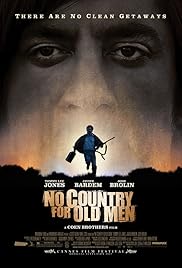
Budget: 25 million
Box Office: 171.6 million
Awards: Best Performance by an Actor in a Supporting Role in a Motion Picture (Golden Globe), Best Picture of the Year (Academy Awards), Best Achievement in Directing (Academy Awards)
Film Genre Research: Menace II Society
The film begins with a black screen with character dialogue and atmospheric noise before showing the two characters enter a market. The dialogue is conversational. A handheld camera captures a two shot of the two talking and walking through the market. A camera on a track shows them walking to the back of the store. The store owner lady comes into the view and stands by the two characters. A back and forth edit between them and the owner lady shows the one character telling her to mind her business and her continuing to look at them. They pick out beers from the fridge while the camera continues to switch to the lady looking at them. When the one character opens the beer, the camera quickly pans to the store owner man who shouts not to drink the beer in the store. It pans back to the characters who say they are going to pay. The lady follows them as they walk toward the counter, and the one character gets increasingly provoked by her. He curses at her and she tells them firmly to hurry up and buy the beer. A close up of her face shows her anger as she continues to follow them. The owner man tells them to hurry up. He seems on edge about their presence. Several back and forth shots between the man, lady, and characters appear as they purchase the beer. As they leave, the man makes a comment about the character's mother, which provokes him. The camera zooms on his face as he walks back to the counter. The two start arguing while the second character drinks his beer. As the camera is on him, gunshots are heard, followed by the lady screaming. An insert shot of his beer breaking on the floor comes before a shot of the one character shooting behind the counter. A two shot of the one character and the screaming lady follows. He forces her to the back to get the camera footage. An eye-line match of the second character as he looks over the counter shows the man's dead body on the floor. A struggle between the lady and the one character is audible before gunshots silence it. The one character emerges from the back and begins opening the register and looting the man's body. The second character is panicking and telling the other character to hurry up. He runs out and is followed by the other character. A voice-over of the second character plays over them running. Sirens and a car can be heard screeching away.
Budget: 3.5 million
Box Office: 27.9 million
Winning Nominations: Best Movie (MTV Awards), Best Cinematography (Spirit Awards)
Budget: 3.5 million
Box Office: 27.9 million
Winning Nominations: Best Movie (MTV Awards), Best Cinematography (Spirit Awards)
Film Genre Research: Scarface
The film starts with the Universal logo before intense incidental music starts playing. Over a black screen, a description of the emigration of thousands of Cubans to America via the newly opened Mariel harbor is flashed. It takes several flashes to show the entire description. A black and white video of Fidel Castro speaking publicly about the decision to a crowd is played. The music shifts to an upbeat song and videos of boats leaving Mariel harbor. The boats are filled with people seeking to get to Florida. The main actor's name flashes on the screen in red font, followed by the title of the movie in bigger font. More videos of people leaving on boats are shown. There are close ups of people's faces, and wide shots of people waving from the boats. There are aerial shots of the boats too. More producers of the movie are flashed in red font periodically between sequences of videos. The videos now show American flags and people eagerly getting off the boats. There are also people hugging as they get onto land. A panning shot shows them walking off the harbor, then another similar shot shows people cramped in detention camps. Close ups show the people's disappointed looks before the last credit is shown and the music fades away.
Budget: 37 million
Box Office: 65.9 million
Nominations: Best Performance by an Actor in a Motion Picture - Drama, Best Performance by an Actor in a Supporting Role in a Motion Picture, Best Original Score - Motion Picture
Budget: 37 million
Box Office: 65.9 million
Nominations: Best Performance by an Actor in a Motion Picture - Drama, Best Performance by an Actor in a Supporting Role in a Motion Picture, Best Original Score - Motion Picture
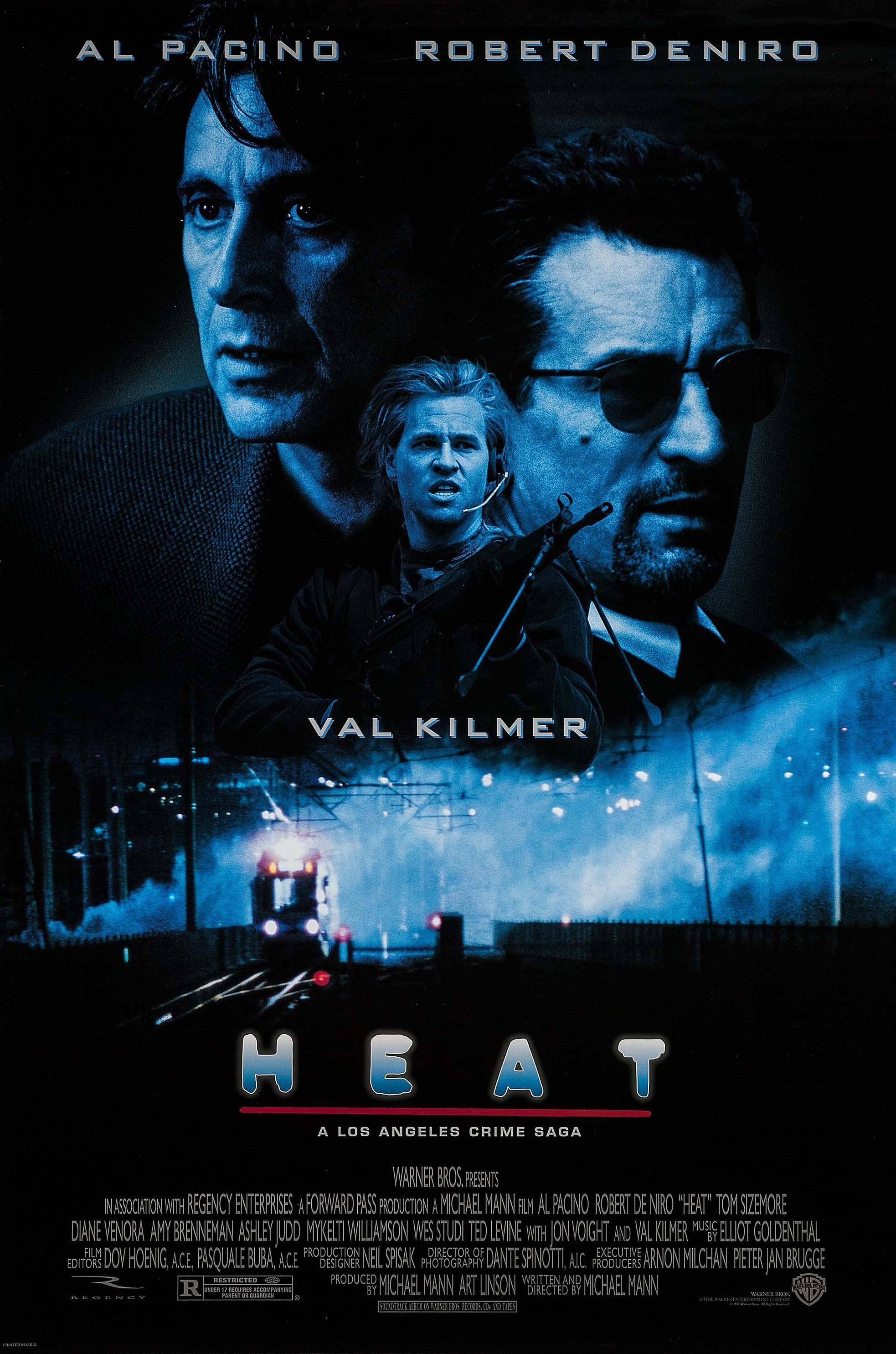
Film Genre Research: Heat
The movie starts with a sequence of production credits with somber incidental music. The cast credits fade in and out on a black screen. The title fades in the same manner but with bigger and bolder font. A nighttime scene of a subway fades in. More cast credits fade in and out on the right of the screen, while a long take of a subway slowly approaches on the left. The train gets louder and closer before the camera switches to the opposite direction to show the train rolling away. The train is now on the right and the credits are on the left. The train stops and the camera cuts to a close up of a man walking out of it. He walks closer to the camera before an over the shot angle shows him descend down an escalator. He is wearing a boiler suit with a hospital badge. The credits are still on the left side. A crane shot is angled directly down at him walking. A low angle shot shows his shoes as he walks by, then angles up at a statue in front of a building. The scene cuts to inside the building. The man pushes the metal door open and walks through the hospital. Several close up shots of the man walking are mixed with shots of patients and hospital equipment. Each shot is only about a second long. There is atmospheric noises from the hospital and there are beeping sound effects. People can be heard saying medical jargon. The man exits the hospital and approaches an ambulance van. He gets in it and starts the engine.
Budget: 60 million
Box Office: 187.4 million
Nominations: Best Cinematography, Best Action-Adventure Film, Best Stunt Ensemble, Best Picture, and several others.
Budget: 60 million
Box Office: 187.4 million
Nominations: Best Cinematography, Best Action-Adventure Film, Best Stunt Ensemble, Best Picture, and several others.
Tuesday, November 12, 2019
Film Genre Research: Sicario: Day of the Soldado
The film begins with menacing and intense incidental music over the production credits. A black screen with a statistic about the Mexican Cartel fades in briefly. An aerial shot of the US Mexico border at night fades in, with howling wind sound effects. The sound of a helicopter grows louder as it emerges from the bottom of the screen. An over the shoulder shot of the pilot shows a thermal imaging screen in the cockpit. Dialogue is exchanged between the pilot and the headset about movement on the screen. Another aerial shot cuts in of the helicopter descending away from the camera. Then there is a wide shot of the helicopter scanning the land with a spotlight. People can be seen running on the screen in another over the shoulder shot. The pilot zooms in on the image to show the people carrying duffel bags. An aerial shot of border patrol intercepting the running people cuts in. Sirens can be heard. The camera cuts to a look of the interception on the ground with a handheld camera. The people can be heard talking frantically as the officers wearing army outfits and "border patrol" badges demand them to get on their knees. The camera is very shaky. A point of view shot of the thermal imaging shows a man attempting to run away. The cross hairs on the image follow him. The scene then cuts to another handheld camera angle of the man running, then stopping abruptly. A wide shot of the man then shows a ravine in front of him and border patrol behind him. He kneels down and begins opening his bag. A mid-shot of the people comes in showing them talking to the border patrol. The scene then cuts back to the kneeling man, who looks nervous. He says a Muslim prayer before being approached by patrolmen. They yell at him to show his hands. A beeping is heard before a wide-shot of the patrolmen and the kneeling man shows him explode. The scene cuts to the thermal image which is glitching out. Menacing incidental music plays.
No credits are given. I watched 20 minutes in with no avail.
It had a budget of 35-45 million and made 75.8 million in the box office.
It was nominated for Best Picture, Best Thriller, and Best Original TV Score Spot. It won the Hamilton Award for the Italian National Syndicate of Film Journalists.

No credits are given. I watched 20 minutes in with no avail.
It had a budget of 35-45 million and made 75.8 million in the box office.
It was nominated for Best Picture, Best Thriller, and Best Original TV Score Spot. It won the Hamilton Award for the Italian National Syndicate of Film Journalists.

Wednesday, October 30, 2019
Project Selection - My Decision
I have chosen to do a movie for my project. I feel that I can be more creative with a film and will have more fun doing it. I think I can effectively portray my character, and can help my actors and actresses with their parts as well. I also feel strong in my ability to write a good script for the movie and keep the dialogue sounding authentic. I'm thinking about doing a comedy/thriller for my genre because I think funny movies can be the most entertaining, and the serious tone will make the film resonate more with the audience. I plan to work in a group of three, and we will most likely be the only main characters. We might invite some other people for small roles, but the majority of the acting will come from us. One of my group members is a good friend of mine, who is always coming up with creative ideas with me. This will make the story writing more fun and easy for us and that will hopefully show in the finished project. My other group member is a friend as well, and she is very funny to be around. I think her acting and her ideas will make the movie a lot more entertaining.
Project Selection - Film
While I got some knowledge of film production from videos and behind the scenes cuts I have seen in the past, the most insightful information I have gathered has been from watching the Production of "Ferris Bueller". I learned that a movie requires script writing, acting, filming, and editing, all of which I can see myself enjoying. I took a theater class in freshman year, so I have a basic understanding of conventional acting techniques. This will help me make the movie seem more natural and less scripted. I have also watched a handful of T.V shows that I believe will make for good inspiration for the story of my movie. I have a vision in my head of what I want the movie to look like, so this will make the story writing and filming easier for me. One of my disadvantages, however, is my lack of film experience and video editing. I will have to learn how to hold and move a camera to capture the shots I want, and I will have to get a feel for editing software. This will definitely take some time, but I hope that I will be able to learn these things on the way so no time is wasted.
Project Selection - Magazine
I have become interested in several aspects of print journalism during my time in this class. After watching "All the President's Men" and The New York Times documentary, I saw reporters venturing out to find the top stories. This showed me that print journalism is an interactive and hands-on job that requires dedication from the journalist, which interests me. Print journalism also requires one to provide accurate information, which I have come to find view as an enjoyable challenge. I know that sources need to be validated for their reliability, which I have experience in doing in my other AICE classes. I also know that the format of the magazine needs to be appealing, which I have had to do in my Microsoft class. These experiences would make me fit for the magazine project. However, I do not have a passion for written journalism, and do not find it enjoyable to write long columns. This would limit the creativity of my magazine because I would not be as interested in what I am doing.
Subscribe to:
Posts (Atom)