The Rise 3rd Quarter Submission
For our 3rd quarter submission, we decided to cut some parts of the script out and re film the entire movie.
The first thing we changed was the script length. Our original movie was over three minutes long, so we had to take some parts of the script out. The opening scene on the phone was kept, but we shortened it dramatically to only include the basic plot information. We also decided to make the phone call happen while Gio was already in the car to avoid the scene where he walks to the car.
Another fix we made to the movie was the wardrobe. In the first film, Carmella was wearing a Drug Free Youth lanyard, which is an ironic thing for a "candy" dealer to be wearing. To solve this problem, we had her wear normal clothes and leave the lanyard out of filming. We also changed Gio's clothes to be more flashy to show his wild character.
Other tweaks we made to the film was the shortening of Carmella's speaking part at the end. We originally had her give a few sentences of dialogue, but we changed it to one single line to manage our time. We also added music to the waiting scene before Alto arrives to make the scene feel less awkward and boring.
Sunday, March 8, 2020

Thursday, March 5, 2020
Distribution Plan
Based on the traditional distribution model and the newer models used by current movies, we have decided on how we are going to distribute our product.
Once production is complete, we will get in touch with a producer rep who will hand off our movie to a distribution company. This company will have to fulfill our distribution goals, which include a theatrical release and a DVD release.
Once the movie is in the hands of our chosen distributor, their work will begin on getting the movie released to the public. Since our movie is not written by any high profile directors and doesn't have a high profile cast, we will skip a Broadway release because of its high costs. Instead, we will go straight to the movie theater release.
After 3 months of theater viewing, we will pull the movie from theaters and release onto DVD and Blu-ray. We won't come out with any 4K options because our camera quality is likely not high enough to be of any 4K use.
To modernize our distribution, we would release our movie onto Netflix after our theatrical run is over and we start digitizing it. We feel that our movie would work well with the streaming audience that Netflix has, but we still want a theater release to keep tradition.
Once production is complete, we will get in touch with a producer rep who will hand off our movie to a distribution company. This company will have to fulfill our distribution goals, which include a theatrical release and a DVD release.
Once the movie is in the hands of our chosen distributor, their work will begin on getting the movie released to the public. Since our movie is not written by any high profile directors and doesn't have a high profile cast, we will skip a Broadway release because of its high costs. Instead, we will go straight to the movie theater release.
After 3 months of theater viewing, we will pull the movie from theaters and release onto DVD and Blu-ray. We won't come out with any 4K options because our camera quality is likely not high enough to be of any 4K use.
To modernize our distribution, we would release our movie onto Netflix after our theatrical run is over and we start digitizing it. We feel that our movie would work well with the streaming audience that Netflix has, but we still want a theater release to keep tradition.
Wednesday, March 4, 2020
Distribution Research: John Wick - Parabellum
John Wick - Parabellum is a movie about a hitman with a bounty on his head who must battle his way through enemies.
The movie first premiered in Brooklyn on May 9th, 2019, and its first theatrical release was on May 17th. It was distributed by Lionsgate. It stayed in theaters until August 23, 2019, when it was released on DVD and Blue-ray by Lionsgate. Less than a month later, it was released on 4k Ultra HD on September 10th.
The movie had a budget of 75 million, but made 326.7 million in the box office.
The movie first premiered in Brooklyn on May 9th, 2019, and its first theatrical release was on May 17th. It was distributed by Lionsgate. It stayed in theaters until August 23, 2019, when it was released on DVD and Blue-ray by Lionsgate. Less than a month later, it was released on 4k Ultra HD on September 10th.
The movie had a budget of 75 million, but made 326.7 million in the box office.
Distribution Research: Gemini Man
Gemini Man is about an ex Marine sniper who must evade a clone of himself that has been hired to kill him.
The movie was first released October 1st, 2019 at the Zurich Film Festival, and then in theaters on October 11th by Paramount Pictures. It was originally set to release on the 4th of the same month, but setbacks at Paramount forced them to push the film back a week. DVD and Blu-ray were released on January 14th, 2020.
The movie was first released October 1st, 2019 at the Zurich Film Festival, and then in theaters on October 11th by Paramount Pictures. It was originally set to release on the 4th of the same month, but setbacks at Paramount forced them to push the film back a week. DVD and Blu-ray were released on January 14th, 2020.
Wednesday, February 26, 2020
Traditional Distribution
Traditionally, films are distributed by a professional distributor, who uses their expertise to optimally market and distribute a film.
A producer rep usually acts as a middle man between the film maker and the distribution companies. Typically they are payed by the film maker a percentage of the movie sales made after distribution. Their job is to advertise and represent a film maker's movie so that distributors will sell it to theaters, DVDs, and streaming services. But this is not the case for all movies; Usually, a producer rep will sell movies in bulk instead of individually, so film makers can be disappointed with their sales. However, as indie films become more popular, the need for this middle man in this process is slowly being fazed out, so film makers might eventually work directly with distributors in the future.
Once the movie gets to a distributor, the movie is usually showed in movie theaters around the country for 90 days, then it gets put onto DVD and other VODs after the first 3 months. However, this 90 day time window has been shrinking, and some new movies have requested to go to VOD sooner than 3 months. Occasionally, a movie will show in theaters and on VOD simultaneously, or eliminate a theatrical release altogether.
To summarize, traditional distribution of a film consists of giving the movie to a producer rep who advertises it to distributors who hopefully release it in theaters and VOD.
A producer rep usually acts as a middle man between the film maker and the distribution companies. Typically they are payed by the film maker a percentage of the movie sales made after distribution. Their job is to advertise and represent a film maker's movie so that distributors will sell it to theaters, DVDs, and streaming services. But this is not the case for all movies; Usually, a producer rep will sell movies in bulk instead of individually, so film makers can be disappointed with their sales. However, as indie films become more popular, the need for this middle man in this process is slowly being fazed out, so film makers might eventually work directly with distributors in the future.
Once the movie gets to a distributor, the movie is usually showed in movie theaters around the country for 90 days, then it gets put onto DVD and other VODs after the first 3 months. However, this 90 day time window has been shrinking, and some new movies have requested to go to VOD sooner than 3 months. Occasionally, a movie will show in theaters and on VOD simultaneously, or eliminate a theatrical release altogether.
To summarize, traditional distribution of a film consists of giving the movie to a producer rep who advertises it to distributors who hopefully release it in theaters and VOD.
Tuesday, February 25, 2020
Marketing Plan
Due to this film's violent and mature themes, our marketing strategy will center around advertising to adults. To do this, we will utilize several mediums through which we post and share ads, and focus on technology to transmit them. Our goal is to develop an effective procedure to maximize movie rentals, streams, and sales.
Our first plan of action for marketing would be to create movie posters to put in movie theaters and on billboards around big cities. We have seen that posters are an effective way to capture viewers' attention, so we would artistically formulate a few of them to showcase the film's story without giving away too much detail. This would intrigue others but leave them in suspense so they will be urged to watch it.
Our next plan would be to make a trailer of our film. This would likely be a short compilation of some scenes from the movie arranged together to leave the audience in suspense, similar to the posters. In order to do this, we would have to film the rest of the movie and then select parts from it that are important to the theme but do not take away from the surprise of watching the actual film.
Our final plan would be to create a social media page, such as an Instagram account. This would allow us to promote our product to people all over the world, and allow others to share it with each other. Below is a mock Instagram page, made to approximately show what one would look like if we made one. Our page would clearly show the name of the film, and would give suspenseful posts to instill interest.

Monday, February 10, 2020
Audience Engagement Research: Joker
Joker is a thriller about Arthur Fleck and his mental transition into the Joker. The movie is violent and has mature themes, and is also about an evolving character, which is similar to our film.
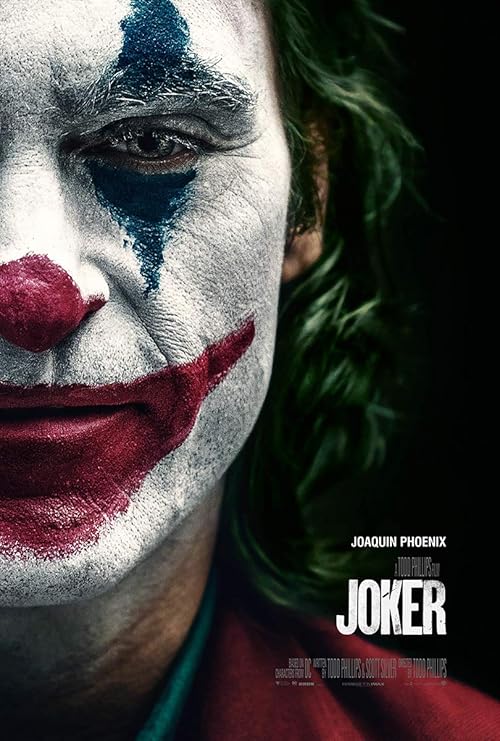
The movie advertised posters with the Joker being the focus point of them. The point of these posters was to get people's attention for the new movie while not giving away too much information about the plot.
A teaser trailer was released by the producers on YouTube, which racked up 62.1 million views. The trailer consisted of short scenes from the movie to make sure the story was not given away, but enough to get peoples' interest. After that, they released two more longer trailers that were similar to the first one.
The movie's website consisted of basic advertising and trailers.
The producers released banner ads on other websites, which sparked controversy on the internet about the movie. This was because of the recent shootings in the media, which people cited as evidence that America was not ready for a movie like this. Nonetheless, it was released, and the dissension over the movie only added to its popularity.
Based on Joker's success, it is clear that posters and trailers are an effective way to advertise a movie. We could implement these strategies in our own film, like creating a main character poster or a short teaser trailer, to maximize our publicity. Although a risky idea, finding a controversial time to release our film - possibly during a drug or crime epidemic - could also raise the attention of the media. However, this could hurt our film as we would likely be seen as cynical for doing something like that, so we will stick with conventional methods.
The movie advertised posters with the Joker being the focus point of them. The point of these posters was to get people's attention for the new movie while not giving away too much information about the plot.
A teaser trailer was released by the producers on YouTube, which racked up 62.1 million views. The trailer consisted of short scenes from the movie to make sure the story was not given away, but enough to get peoples' interest. After that, they released two more longer trailers that were similar to the first one.
The movie's website consisted of basic advertising and trailers.
The producers released banner ads on other websites, which sparked controversy on the internet about the movie. This was because of the recent shootings in the media, which people cited as evidence that America was not ready for a movie like this. Nonetheless, it was released, and the dissension over the movie only added to its popularity.
Based on Joker's success, it is clear that posters and trailers are an effective way to advertise a movie. We could implement these strategies in our own film, like creating a main character poster or a short teaser trailer, to maximize our publicity. Although a risky idea, finding a controversial time to release our film - possibly during a drug or crime epidemic - could also raise the attention of the media. However, this could hurt our film as we would likely be seen as cynical for doing something like that, so we will stick with conventional methods.
Subscribe to:
Posts (Atom)